You upload
- Colour, texture and motif read from the cloth
- Cut to lehenga construction rules
- Photographed on your chosen model
You get
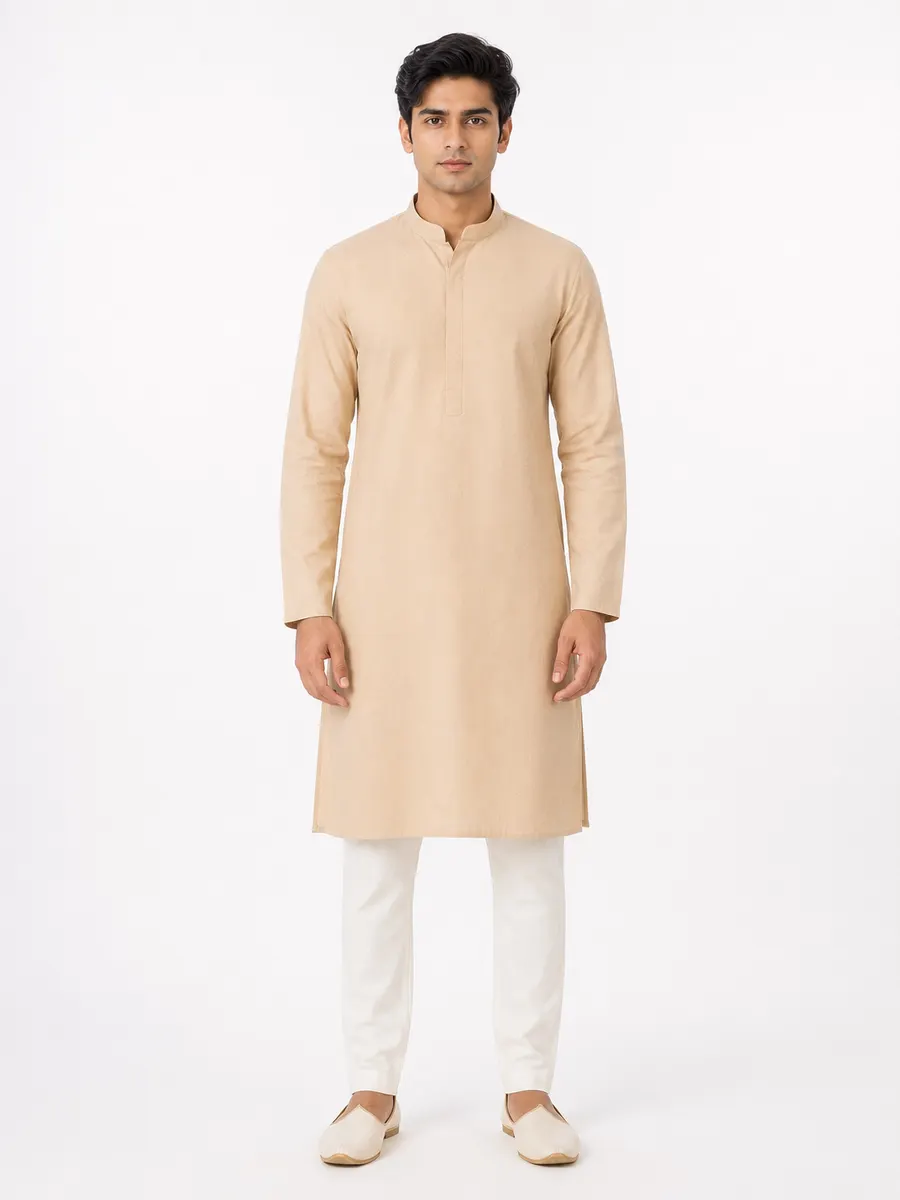
Example output. Generated figure, not a real person.
Why is a lehenga harder to generate than a single garment?
A lehenga is three separate garments made from one cloth, and each one needs the fabric handled differently. The skirt is built from tapered vertical panels — kalis — seamed so the flare grows toward the hem, and the pattern has to match across every one of those seams. The choli is a small panel that needs a single well-placed motif rather than a cropped fragment of a large one. The dupatta should read as a lighter companion piece, not a third copy of the skirt.
The common failure in AI-generated lehenga photos is uniform texture mapping: the same repeat applied at the same density to all three pieces, which reads instantly as fabric wallpaper. Vastram Studio's lehenga profile allocates fabric per component explicitly, which is what keeps the set looking designed rather than printed.
The hard part
Where lehenga photos usually go wrong
These are the failures a buyer notices before they notice anything else — and the reason a generic image tool isn't enough for garment work.
Kali seams must pattern-match
The choli is a placement problem
Three borders, three weights
Construction
How Vastram Studio cuts a lehenga set
The lehenga is classified as a multi-piece garment, which means the generator receives an explicit fabric-allocation list rather than one instruction for the whole outfit:
- The skirt built from multiple tapered panels (kalis) seamed vertically so the flare grows toward the hem, with the pattern matched across every seam.
- A fitted waistband at or just below the natural waist, with a floor-length hem carrying enough sweep to fall in deep vertical folds.
- The choli cut as a fitted, cropped bodice with bust shaping, a designed neckline, short or elbow sleeves and a back closure — motif placement chosen for a small panel.
- The dupatta as a long rectangular length with finished edges, carrying the same textile at lighter motif density.
- Motif scale held constant across all three pieces, so they read as one coordinated set rather than three separate purchases.
Where the detailing lands
- Border placement
- Heaviest at the skirt hem, running the full sweep; echoed narrowly along the dupatta's long edges; minimal on the choli, at the neckline or sleeve edge only.
- Motif handling
- The generator is instructed to hold scale constant across skirt, choli and dupatta, and not to shrink the pattern to fit the choli, stretch it to fill the skirt, or texture-map the identical repeat uniformly across all three.
- Drape
- The skirt falls in deep vertical folds from the waist and sweeps at the hem; the dupatta hangs softly with fluid folds.
- Fit across figures
- The choli is fitted to the actual bust and torso with natural ease, and the skirt waistband is set to the true waist — the flare starts from there, so the silhouette stays correct at any size.
Workflow
From cloth to lehenga catalog in four steps
- 1
Upload one reference
Shoot the fabric flat with the border visible along one edge, and include a section of the main field so motif scale is readable. For heavily worked bridal fabrics, diffuse daylight beats direct sun — blown highlights on zari cost you the detail buyers are paying for.
- 2
Choose lehenga and a model
Pick the garment type, model type and body type, then a pose and a background from the studio library — or upload your own model, pose or background to reuse across the season.
- 3
Generate the set
Ask for several poses, backgrounds and colourways in one job. Images arrive as they finish rather than all at once, so you see the first result before the whole batch is done.
- 4
Brand, group and share
Add your logo, design number and rate, group the results into a catalog, export a PDF, or send a private lookbook link on WhatsApp.
Output
What a lehenga shoot gives you
- Full-length front and three-quarter frames that show the skirt's sweep and the dupatta drape together.
- A choli detail frame, where neckline and motif placement are actually visible.
- Dark-studio and warm-beige sets for bridal and festive campaigns, plus studio white for listings.
- Alternative colourways of the same set, for showing a design in the shades you can dye it in.
One credit, one photo
Every image costs one credit, and credits never expire. There is no subscription and no per-seat charge — see pricing for the current packs.
Every image is delivered in the shape you need
The same generated photo downloads as an Instagram feed crop, a story frame, a marketplace listing, a website or PDF image, or a square post — resized on the way out rather than cropped by hand.
Marketplace listing
3:4
Instagram feed
4:5
Story & WhatsApp
9:16
Website & PDF
2:3
Square post
1:1
More on choosing between them in the image-sizes guide.
Questions
Lehenga photoshoot questions
Will the skirt, choli and dupatta look like a matched set?
Can I generate a bridal lehenga from a heavily embroidered fabric photo?
Can I show the lehenga without the dupatta?
Your next lehenga shoot starts with one photo of the cloth.
Sign up, upload a reference, and see the first result before you spend anything.
Create your lehenga photoshoot2 free credits on signup. No card needed.
Keep reading
AI saree photoshoot
Draped, not stitched — pleats, pallu and border in the right places.
OpenFabric to model
Turn a flat length of cloth into a stitched garment on a model.
OpenFor fashion & D2C brands
One consistent house look across every listing and every season.
OpenCatalog & PDF lookbook
Group designs into a catalog, export a PDF, share a private link.
Open